Ziyarat Guide: Holy Sites to Visit in Makkah & Madinah During Umrah
By Big Bird Travel Team
Beyond Tawaf and Sa'i, a well-planned Umrah leaves room for ziyarat - visiting the historic sites of Makkah and Madinah. This guide covers the key places, what happened there, how to book the Rawdah on Nusuk, and the etiquette every pilgrim from the UAE should know.
Umrah itself is completed with a handful of rituals - Ihram, Tawaf around the Kaaba, Sa'i between Safa and Marwah, and trimming the hair. But most pilgrims travelling from the UAE want to make the most of their days in the two holy cities, and that is where ziyarat comes in: visiting the historic sites of Makkah and Madinah where the key events of early Islam took place. This guide walks you through the most meaningful places to see, what happened at each, how to book the Rawdah on the Nusuk app, and the etiquette to observe so your visit is both rewarding and correct.
Ziyarat is customary, not a pillar
Visiting these sites is a cherished tradition that deepens your connection to the Seerah, but it is not part of the Umrah rituals themselves and is not obligatory. Treat ziyarat as reflection and learning - never as an act of worship directed at a place, grave or person.
What Is Ziyarat and How It Fits Around Your Umrah
Ziyarat simply means a visit. In the context of Umrah it refers to touring the mosques, mountains, battlefields and cemeteries connected to the life of the Prophet Muhammad (PBUH) and his companions. Groups usually complete their Umrah first, then set aside a half-day for ziyarat in Makkah and another in Madinah, often with a guide who explains the history at each stop. A typical UAE package builds this in, so you are not navigating an unfamiliar city or arranging transport on your own.
Ziyarat Sites in Makkah
Masjid al-Haram
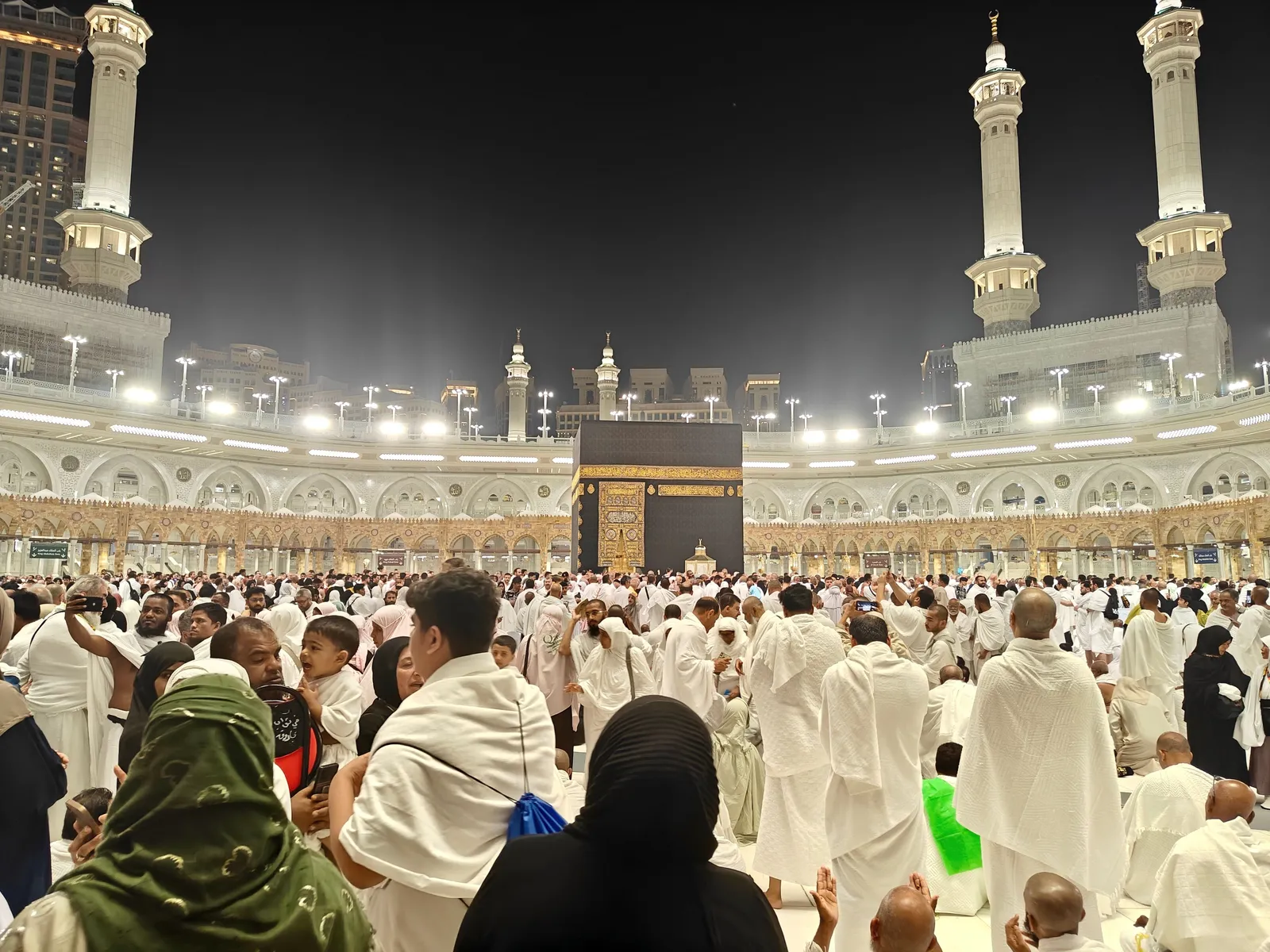
The Grand Mosque is the heart of every trip - home to the Kaaba, the Black Stone (Hajar al-Aswad), the Station of Ibrahim (Maqam Ibrahim), the well of Zamzam, and the hills of Safa and Marwah where you perform Sa'i. You will spend most of your worship here, so there is no separate ziyarat needed, but it remains the single most significant site in Makkah.
Jabal al-Nour and the Cave of Hira
The 'Mountain of Light' lies a few kilometres north-east of the Haram. Near its summit is the Cave of Hira, where the Prophet (PBUH) would retreat and where the first verses of the Quran were revealed to him by the Angel Jibril. The climb to the cave is long and steep - well over an hour and not suitable for everyone - so many pilgrims simply view the mountain from its base and reflect on what began there.
Jabal Thawr and the Cave of Thawr
South of Makkah stands Jabal Thawr, home to the cave where the Prophet (PBUH) and Abu Bakr (RA) sheltered for three nights during the Hijra to Madinah while the Quraysh searched for them. The ascent is even more demanding than Hira, so most visitors observe it from the roadside as their guide recounts the story of the migration.
Arafat, Muzdalifah and Mina
These plains east of Makkah are central to Hajj rather than Umrah, but many pilgrims still drive out to see them. On Arafat stands Jabal al-Rahmah, the Mount of Mercy, where the Prophet (PBUH) delivered his Farewell Sermon. Seeing these vast, mostly empty plains outside the Hajj season gives a powerful sense of scale.
Masjid Aisha (Al-Taneem)
About seven kilometres north of the Haram, Masjid Aisha marks one of the Miqat boundaries. Pilgrims already inside Makkah who wish to perform a second Umrah come here to enter the state of Ihram again before returning to the Grand Mosque.
- Masjid al-Haram - the Kaaba, Black Stone, Maqam Ibrahim, Zamzam, Safa and Marwah
- Jabal al-Nour - the Cave of Hira, site of the first revelation
- Jabal Thawr - the Cave of Thawr from the Hijra
- Jabal al-Rahmah on Arafat - the Farewell Sermon
- Masjid Aisha (Al-Taneem) - a Miqat for a second Umrah
- Jannat al-Mu'alla - the historic cemetery of Makkah
| Site | Approx. Distance from Haram | Why It Matters |
|---|---|---|
| Jabal al-Nour (Hira) | 4 km | First revelation of the Quran |
| Jabal Thawr | 4 km | Cave of the Hijra |
| Masjid Aisha (Taneem) | 7.5 km | Miqat for a second Umrah |
| Mount Arafat | 20 km | Farewell Sermon; Hajj standing |
| Mina | 5 km | Hajj tent city and Jamarat |
Distances and access change
Approximate distances above are for planning only, and access to some sites can be restricted or affected by ongoing construction and crowd-control measures. Confirm the current itinerary with your guide, and always verify Saudi entry, permit and health requirements before you travel.
Ziyarat Sites in Madinah
Madinah is the city of the Prophet (PBUH), and its ziyarat sites are among the most moving of the whole journey. Most UAE packages include two to four nights here after Makkah, with a guided tour of the following places.
Masjid an-Nabawi and the Rawdah
The Prophet's Mosque holds his blessed resting place alongside those of Abu Bakr (RA) and Umar (RA). Within it is the Rawdah - the area between the Prophet's pulpit and his chamber - which he described as 'a garden from the gardens of Paradise.' Praying in the Rawdah is one of the most sought-after experiences in Madinah, and since 2024 it requires a free permit booked in advance through the Nusuk app.
Quba Mosque
Quba is the first mosque built in Islam, founded by the Prophet (PBUH) on his arrival in Madinah. It is narrated that whoever purifies themselves at home, comes to Quba and prays two rak'ahs there earns a reward like that of an Umrah - which is why so many pilgrims make the short trip. A modern expansion has made the mosque far larger than in the Prophet's time.
Masjid al-Qiblatain
The 'Mosque of the Two Qiblas' is where the revelation came to change the direction of prayer from Jerusalem to the Kaaba in Makkah. The congregation turned mid-prayer, and the mosque has commemorated that moment ever since.
Mount Uhud and the Martyrs
North of the city lies Mount Uhud, site of the Battle of Uhud in the third year after the Hijra. Nearby is the cemetery of the martyrs, including the Prophet's uncle Hamza (RA). Guides recount the events of the battle, and the site is a sobering reminder of the sacrifices of the early companions.
Jannat al-Baqi
The principal cemetery of Madinah, Jannat al-Baqi, is the resting place of many companions and members of the Prophet's household. Visiting hours are limited and access is generally for men; women may view it from outside. Pilgrims make a quiet supplication for the deceased in keeping with the Sunnah.
- Masjid an-Nabawi - the Prophet's Mosque and the Rawdah
- Quba Mosque - the first mosque in Islam
- Masjid al-Qiblatain - the change of the Qibla
- Mount Uhud and the martyrs' cemetery
- Jannat al-Baqi - the historic cemetery of Madinah
- The Seven Mosques area near the site of the Battle of the Trench
The Rawdah needs a Nusuk permit
Entry to the Rawdah is by timed permit only, booked free through the Nusuk app, with separate slots for men and women. Each pilgrim may usually book the Rawdah only once in a 365-day period, and you get roughly ten minutes inside. Slots are released a week or two ahead and disappear within minutes, so plan early.
How to Book Your Rawdah Slot on Nusuk
- 1.Download the official Nusuk app and register as a Visitor using your passport or border number and visa details
- 2.Verify your account with the one-time password sent to your phone
- 3.On the home screen, open 'Prophet's Mosque Services' and tap 'Praying in the Noble Rawdah'
- 4.Select your gender, then a date - only the slots available to you appear in green
- 5.Confirm your slot and save the QR-code permit that is issued instantly
- 6.Arrive at the assigned gate at your allotted time and show the QR code to staff
Start checking about ten days out
Rawdah slots are typically released seven to fourteen days in advance (and only three to five days ahead during Ramadan). Check the Nusuk app daily around that window and book the moment a slot turns green. Your Umrah permit for entering Masjid al-Haram is also issued free through Nusuk.
Etiquette and Adab for Ziyarat
- Keep your intention pure - visit to reflect, learn and make du'a to Allah alone, never to seek help from the deceased
- Dress modestly and maintain the calm, respectful conduct expected in the holy cities
- Follow the instructions of mosque staff and volunteers, especially around the Rawdah and cemeteries
- Avoid pushing, unnecessary photography of crowds, or blocking pathways during busy prayer times
- Send salutations upon the Prophet (PBUH) at his mosque and supplicate for the deceased at Baqi and Uhud as taught in the Sunnah
- Carry water, wear comfortable footwear and pace yourself - Madinah ziyarat involves a fair amount of walking
How Big Bird Travel Arranges Guided Ziyarat
For pilgrims travelling from Dubai, Abu Dhabi and Sharjah, the easiest way to see these sites is on a guided ziyarat tour built into your Umrah package. Big Bird Travel arranges air-conditioned transport, knowledgeable guides who explain the history at each stop, and a schedule that fits around prayer times and your Rawdah slot. We also assist with your Umrah visa through Nusuk, hotels close to the Haram and the Prophet's Mosque, and flights from the UAE - so all you focus on is worship and reflection.
If you are still planning the basics, our step-by-step Umrah guide walks through every ritual, our packages guide explains hotel tiers and what is included, and our best-time guide helps you choose when to travel.
Plan Your Umrah and Ziyarat with Big Bird Travel
Ziyarat turns a short pilgrimage into a journey through the story of Islam - from the Cave of Hira where it all began to the Prophet's Mosque in Madinah. Plan a little extra time for it, book your Rawdah permit early, and let our team handle the transport and logistics so your days in the holy cities are spent where they matter most.
Planning your Umrah?
Flights, visa and hotels near the Haram, arranged by our team.
Related services
