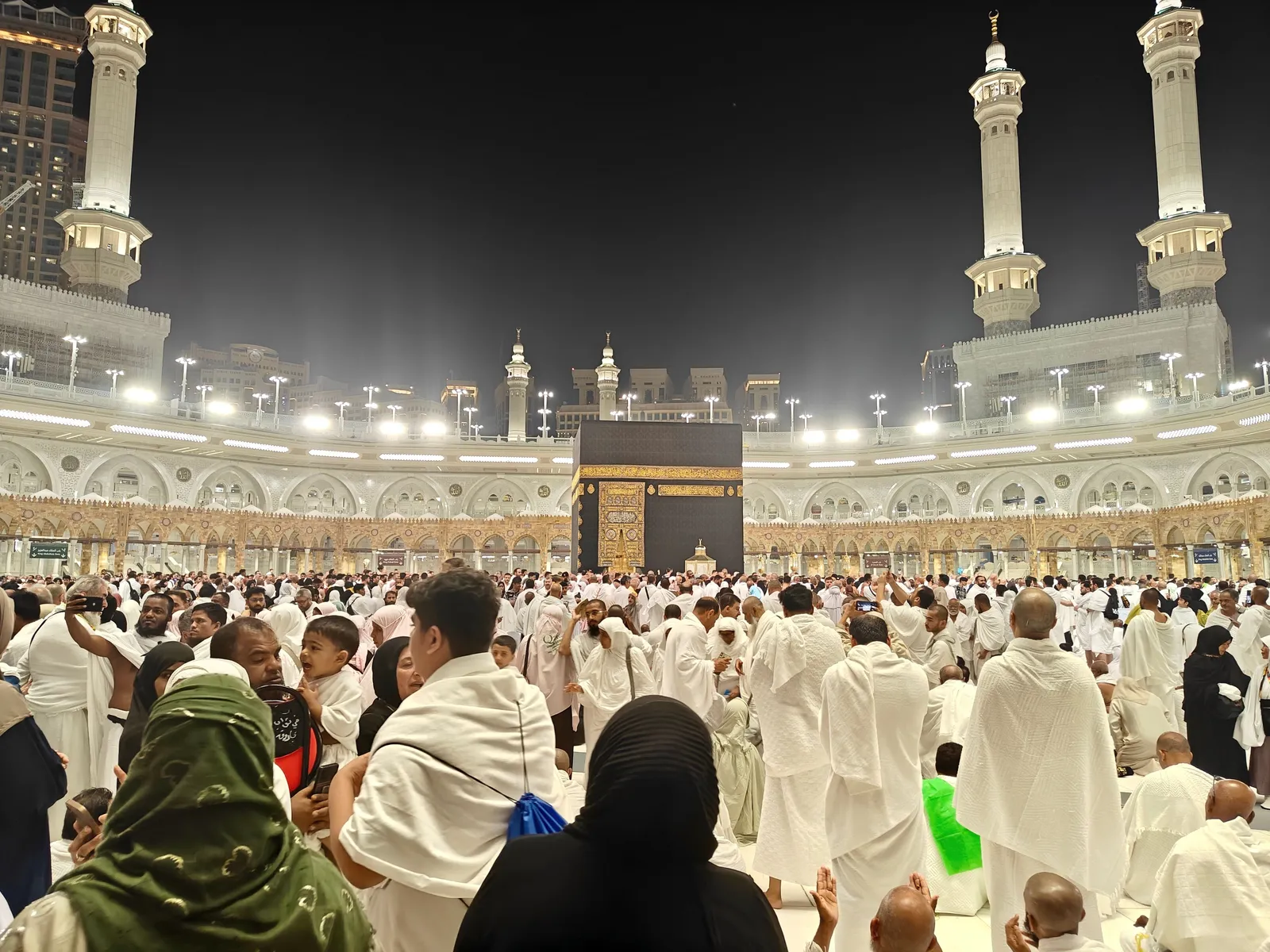
How to Perform Umrah Step by Step: A First-Timer's Guide from UAE
By Big Bird Travel Team
Performing Umrah for the first time can feel overwhelming. This plain-English, step-by-step guide walks UAE pilgrims through every stage - from entering Ihram to the final Halq or Taqsir - so you arrive at the Haram calm, confident and ready.
Umrah is one of the most rewarding acts of worship a Muslim can perform, and unlike Hajj it can be undertaken at any time of the year. For UAE residents the journey is short - a 3.5-hour flight from Dubai or Abu Dhabi to Jeddah or Madinah - but the rituals themselves are what many first-time pilgrims worry about most. The good news is that Umrah has only four essential steps, and once you understand the sequence, the experience becomes calm and deeply moving rather than confusing.
This guide explains exactly how to perform Umrah, step by step, in plain language. It is written for first-time pilgrims travelling from the UAE, and it assumes you already have your visa, flights and hotels arranged. If you are still at the planning stage, start with our Umrah packages guide and our documents checklist first, then come back to this page to learn the rituals.
Learn before you land
Read this guide two or three times before you travel and, if you can, watch a short video of Tawaf and Sa'i. Arriving at the Haram already familiar with the flow means you can focus on your worship rather than logistics.
The Four Pillars of Umrah at a Glance
Every valid Umrah is made up of the following stages, performed in order. Completing all four - with Ihram entered from the correct point - is what makes your Umrah complete.
| Step | Ritual | What Happens | Approx. Time |
|---|---|---|---|
| 1 | Ihram | Enter the sacred state, make your intention (niyyah) and recite the Talbiyah | 30-60 min |
| 2 | Tawaf | Circle the Kaaba seven times, then pray two rakat near Maqam Ibrahim | 45-90 min |
| 3 | Sa'i | Walk seven times between the hills of Safa and Marwah | 45-90 min |
| 4 | Halq / Taqsir | Shave (men) or trim (men and women) the hair to exit Ihram | 10-20 min |
From start to finish, Umrah typically takes between two and three hours when the Haram is not overcrowded. During Ramadan or peak weekends it can take considerably longer, so pace yourself and stay hydrated.
Step 1: Entering Ihram
Ihram is both a physical state and a spiritual one. Physically, men wear two plain white unstitched cloths - one wrapped around the waist (izar) and one over the upper body (rida). Women have no fixed dress; they wear ordinary modest Islamic clothing that covers the body, leaving the face and hands uncovered. Spiritually, Ihram is a state of consecration in which certain everyday actions become temporarily forbidden.
Before You Put On Ihram
- 1.Perform Ghusl (a full ritual bath) - this is a recommended Sunnah before Ihram
- 2.Trim your nails, remove excess body hair and, for men, apply unscented deodorant if needed (perfume is not allowed once in Ihram)
- 3.Men change into the two white Ihram cloths; women wear their modest clothing
- 4.Pray two rakat with the intention of Ihram where prayer is permitted
The Miqat and Your Niyyah
You must enter Ihram before crossing the Miqat - the designated boundary around Makkah. Pilgrims flying from the UAE usually enter Ihram either at home, at the UAE airport, or on the aircraft when the captain announces the Miqat is approaching. If you are flying to Madinah first, your Miqat is Dhul-Hulayfah (Abyar Ali) as you travel on to Makkah. Once at the Miqat, make your niyyah (intention) for Umrah in your heart and begin the Talbiyah:
"Labbayk Allahumma Labbayk, Labbayka la sharika laka Labbayk. Innal-hamda wan-ni'mata laka wal-mulk, la sharika lak" - Here I am, O Allah, here I am. Here I am, You have no partner, here I am. Truly all praise, favour and sovereignty belong to You; You have no partner.
Recite the Talbiyah frequently and audibly (men) or quietly (women) from this point until you reach the Kaaba and begin Tawaf.
Restrictions while in Ihram
Once in Ihram, avoid using scented products, cutting hair or nails, covering the head (for men), covering the face (for women), arguing, and any marital intimacy. Wearing stitched clothing is prohibited for men. Breaking these knowingly may require a penalty (dam). If unsure, ask your group leader before acting.
Step 2: Tawaf - Circling the Kaaba
On reaching Masjid al-Haram, enter with your right foot and make dua. When your eyes first fall on the Kaaba, pause and supplicate - many pilgrims describe this as the most emotional moment of the journey. You must be in a state of Wudu (ablution) to perform Tawaf.
Tawaf means circling the Kaaba seven times in an anti-clockwise direction, beginning and ending at the corner where the Black Stone (Hajar al-Aswad) is located. Follow these points:
- Start each circuit level with the Black Stone. Face it, raise your hand towards it and say "Bismillah, Allahu Akbar." If you can kiss or touch it safely do so, but never push or harm others to reach it - pointing towards it is completely acceptable
- Keep the Kaaba on your left as you walk
- Men perform Raml (walking briskly with the chest out) in the first three circuits if space allows, then walk normally for the remaining four
- For men, the right shoulder is kept uncovered during Tawaf (this is called Idtiba)
- There is no fixed dua for each circuit - recite any Quran, dhikr or personal supplication in any language
- On reaching the Yemeni corner, if easy, recite "Rabbana atina fid-dunya hasanah..." until the Black Stone to complete each round
After the seventh circuit, cover both shoulders again and, if possible, pray two rakat behind Maqam Ibrahim (the Station of Abraham). If it is crowded, you may pray these two rakat anywhere within the Haram. Afterwards, it is Sunnah to drink Zamzam water freely.
Step 3: Sa'i - Between Safa and Marwah
Sa'i commemorates Hajar's search for water for her infant son Ismail. You walk seven times between the two small hills of Safa and Marwah, which are now enclosed within an air-conditioned marble gallery inside the Haram.
- 1.Proceed to Safa and, facing the Kaaba, raise your hands and make dua. Reciting the verse "Innas-Safa wal-Marwata min sha'a'irillah" the first time is recommended
- 2.Walk towards Marwah - this counts as the first of seven trips
- 3.Men are encouraged to jog lightly between the two green markers (the area of the old valley); women walk normally throughout
- 4.On reaching Marwah, face the Kaaba and make dua again
- 5.The return to Safa is the second trip. Continue until you complete seven, ending at Marwah
- 6.There is no fixed dua for Sa'i - supplicate freely in any language throughout
For elderly or unwell pilgrims
Wheelchairs and electric buggies are available inside the Haram for Tawaf and Sa'i, with dedicated upper levels for smoother movement. If a family member struggles with distance or heat, arrange this in advance - Big Bird Travel can advise on hotels closest to the Haram to minimise walking.
Step 4: Halq or Taqsir - Exiting Ihram
The final act of Umrah is cutting the hair. Men may either shave the head completely (Halq) or trim it evenly (Taqsir) - shaving carries greater reward. Women trim only a small amount, about a fingertip's length, from the ends of their hair. Women do not shave their heads.
Once you have cut your hair, your Umrah is complete and all Ihram restrictions are lifted. You may change back into normal clothes, use perfume again and resume ordinary activities. Many pilgrims perform additional voluntary Tawaf during the rest of their stay, and most packages include time in Madinah for ziyarat afterwards.
A Simple Pre-Departure Checklist
- Passport valid 6+ months, Umrah visa confirmed and Nusuk profile registered
- Meningitis (ACYW135) vaccination certificate - required, taken at least 10 days before travel
- Ihram garments (men) and a spare set; modest clothing and prayer garments (women)
- Unscented soap, comfortable sandals and a small bag for shoes inside the Haram
- A pocket dua guide or the free Nusuk app for step-by-step ritual reminders
- Basic medication, rehydration salts and a refillable Zamzam-safe bottle
For the full document list, including vaccination and Mahram rules for women, see our dedicated Umrah documents checklist. To choose the right hotel tier and duration, read our guide to Umrah packages from the UAE.
Plan Your Umrah with Big Bird Travel
Planning your Umrah?
Flights, visa and hotels near the Haram, arranged by our team.
Related services
